NIS2, DORA, CRA : trois réglementations qui convergent vers le même principe
La cybersécurité devient un sujet de gouvernance, de résilience et de maîtrise des risques.Le dernier baromètre OpinionWay pour le CESIN montre que ces trois cadres réglementaires dominent désormais les priorités des entreprises.
1. NIS2 : le nouveau centre de gravité
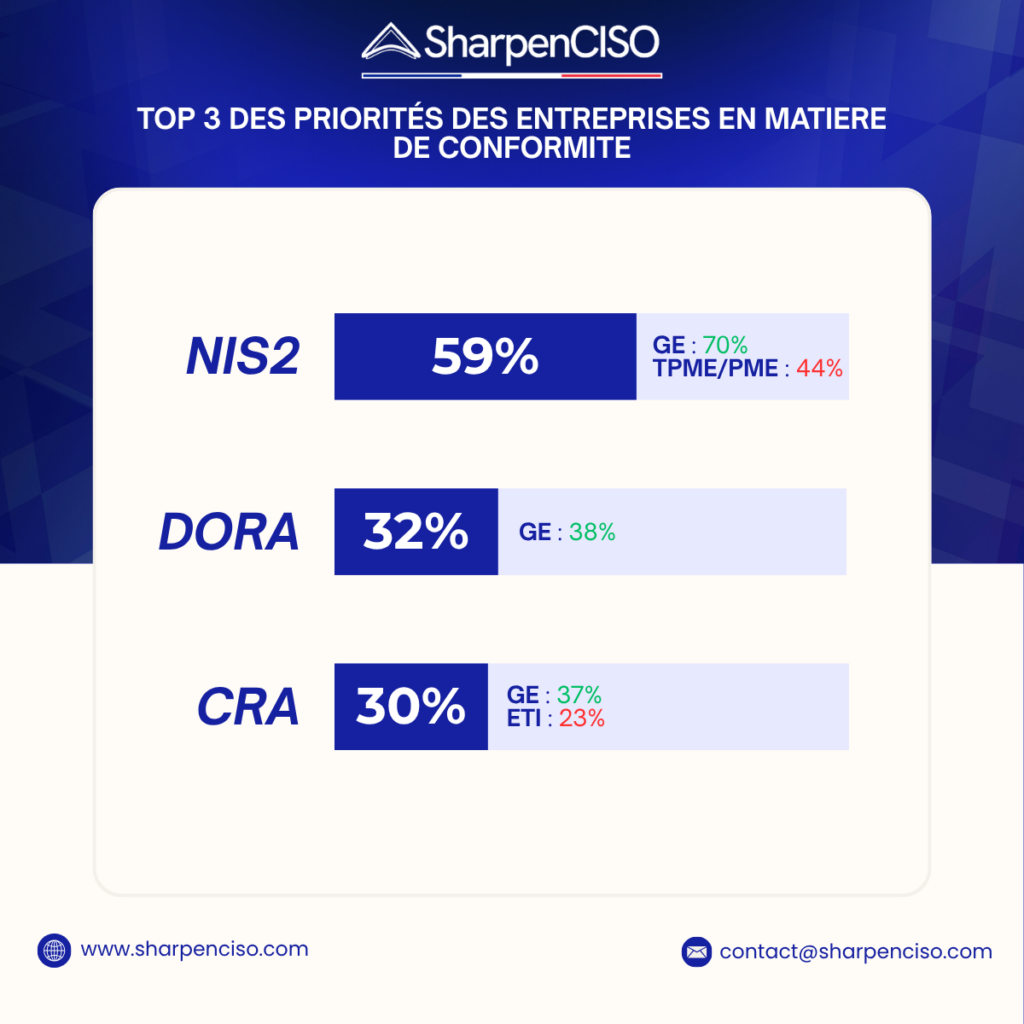
70% des grandes entreprises placent NIS2 en tête de leurs priorités, contre seulement 44% des TPE/PME.Les grands groupes, déjà rodés à NIS1, ont une longueur d’avance. Les structures plus petites, elles, découvrent encore l’ampleur des exigences : gestion des risques, notification d’incidents, chaîne d’approvisionnement.
2. DORA : la résilience opérationnelle au cœur de la finance
DORA reste une priorité forte pour les grandes entreprises, à 38%. Cela reflète son périmètre centré sur le secteur financier et ses prestataires TIC critiques. Tests de résilience, gestion des risques tiers, gouvernance : c’est une discipline exigeante.
3. Le CRA : sécuriser les produits dès la conception
Avec le CRA, la logique bascule vers le Secure by Design et le Secure by Default. Les grandes entreprises l’anticipent davantage (37%) que les ETI (23%). Cet écart reste important face aux enjeux de SBOM et de patch management.
Ce qui distinguera les organisations les plus performantes
Nous sommes convaincus que les organisations qui progresseront le plus seront celles qui sauront :
- Mutualiser les contrôles et les référentiels entre les différents cadres réglementaires.
- Prioriser les actions selon le niveau de risque réel, plutôt que selon la facilité à produire des preuves de conformité.
- Donner aux équipes cyber GRC les outils nécessaires pour industrialiser les évaluations, produire des preuves fiables et piloter plusieurs réglementations sans multiplier les efforts.
Faire de la conformité un levier, pas une obligation
C’est précisément l’approche que nous développons avec SharpenCISO, notre plateforme GRC AI-native automatisée en temps réel. Notre objectif : faire de la conformité un vrai levier de gestion des risques cyber, pour améliorer durablement la posture de sécurité — et non plus une succession d’obligations réglementaires.
Et vous, quel dispositif avez-vous mis en place ?
Curieux de savoir quel dispositif vous avez mis en place pour améliorer la performance et l’impact de vos équipes en charge de la cyber GRC.
#SharpenCISO #CISO #RSSI #GRC #Cybersécurité #ISO27001 #ISO27005 #EBIOS #NIS2 #DORA #NIST #Compliance #SecurityByDesign #CRA